CAMDOC
Cambodia Development Organization for Children
you are here: home > programs > sanitation & health
Sanitation & Health
Total Sanitation
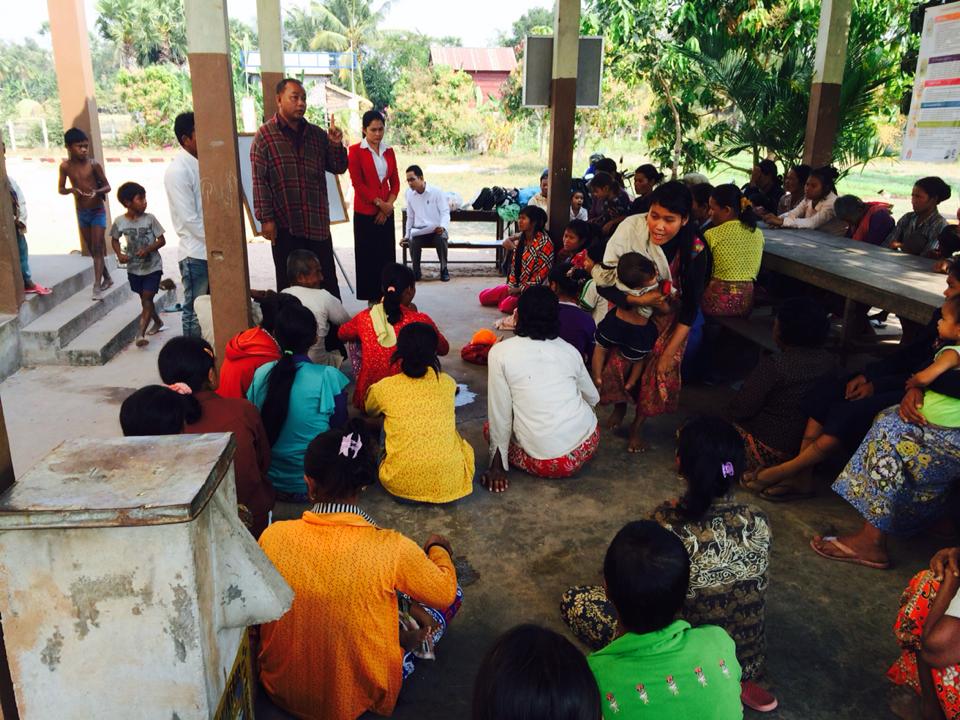
village hygiene course
The big challenge is to get sanitation concepts accepted by the village population. The current status is that a vast majority of the people do not have a toilet, have no idea why to wash their hands after doing their relief. Especially the women have a lack of privacy. It is through the women that we want to introduce the concept of total sanitation and PHAST (Participatory Hygiene And Sanitation Transformation) as described by the World Health Organisation W.H.O.
CAMDOC staff, some school teachers and nurses from the local health center are the persons, after training, to help us bring the people in the villages to a level of understanding and accepting basic sanitation. Once started with such a program it must be possible to acquire financial sources to actually improve the hygiene situation by supporting the villagers in building sustainable toilets and making them understand the necessity of washing their hands with soap and brushing their teeth.
Since a few years, the CAMDOC staff, with help of the Head of the Health
Center monthly organize Hygiene Courses in the villages, to show and discuss
how to practice hygiene in daily life.
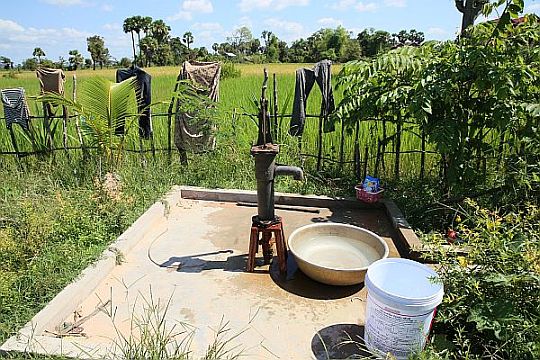
donated well
Clean Drinking Water
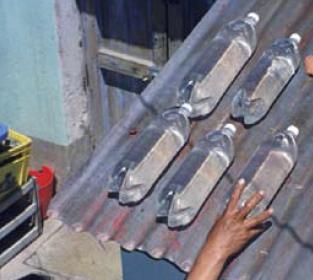
CAMDOC runs an intensive program to rapidly increase the number of simple low cost clean pump wells. By measuring on location we found out, that several of the existing 'clean water' pump wells were contaminated with E-coli, one of the main causes of diahrroea and other infections. CAMDOC will try to introduce the several methods of cleaning the water from bacterea e.g. the
SODIS mehod by exposing the water in plastic bottles to the sunlight, or with ceramic filters, to be produced in the area.
Highly important, in this respect, is to make people understand that the immediate surrounding of the wells must be kept free from human and animal excrements.
Toilets
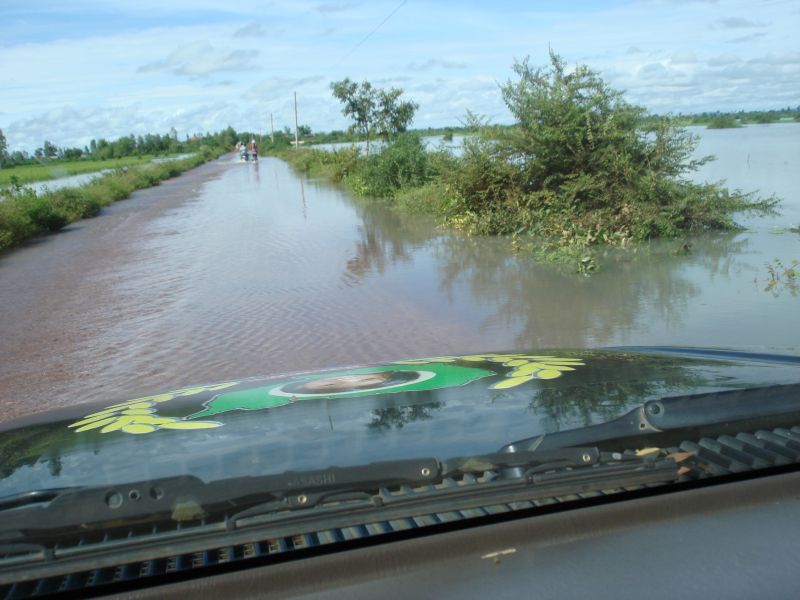
An experiment introducing composting toilets in one of the villages, was not well adapted by the people. The small toilets needed daily care; the preparation of organic material suited as supplement to accellerate the composting process caused major problems. Studies are done for the development of pit latrines with concrete containers, placed high enough to avoid pollution of the land during the flooding in the rainy season.
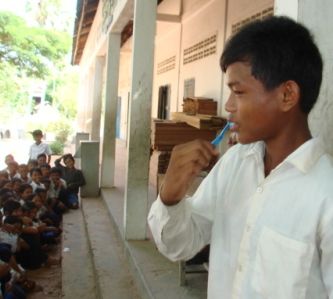
instruction in tooth brushing
dental hygiene and health
CAMDOC and Cambodia Child Aid introduced a tooth hygiene program giving students of primary schools tooth brushes and tooth paste and an introduction on 'how to...' and basic dental hygiene.
It is a continous attempt making clear that brushing teeth avoids bad dental
health and its influences on general health.
In 2014 a first intensive dental health care project was carried out
with volunteer dentists. Continuation should lead to knowledge and experience
for a later state organized system
of dental health care available at the Health Center of the commune
With support of CCA, CAMDOC has started a program to sell tooth brushes and paste, as well as soap and washing detergent for prices about half the shop prices, just to get people that far that they spend a small part of their monthly budget to buy and use hygiene related products
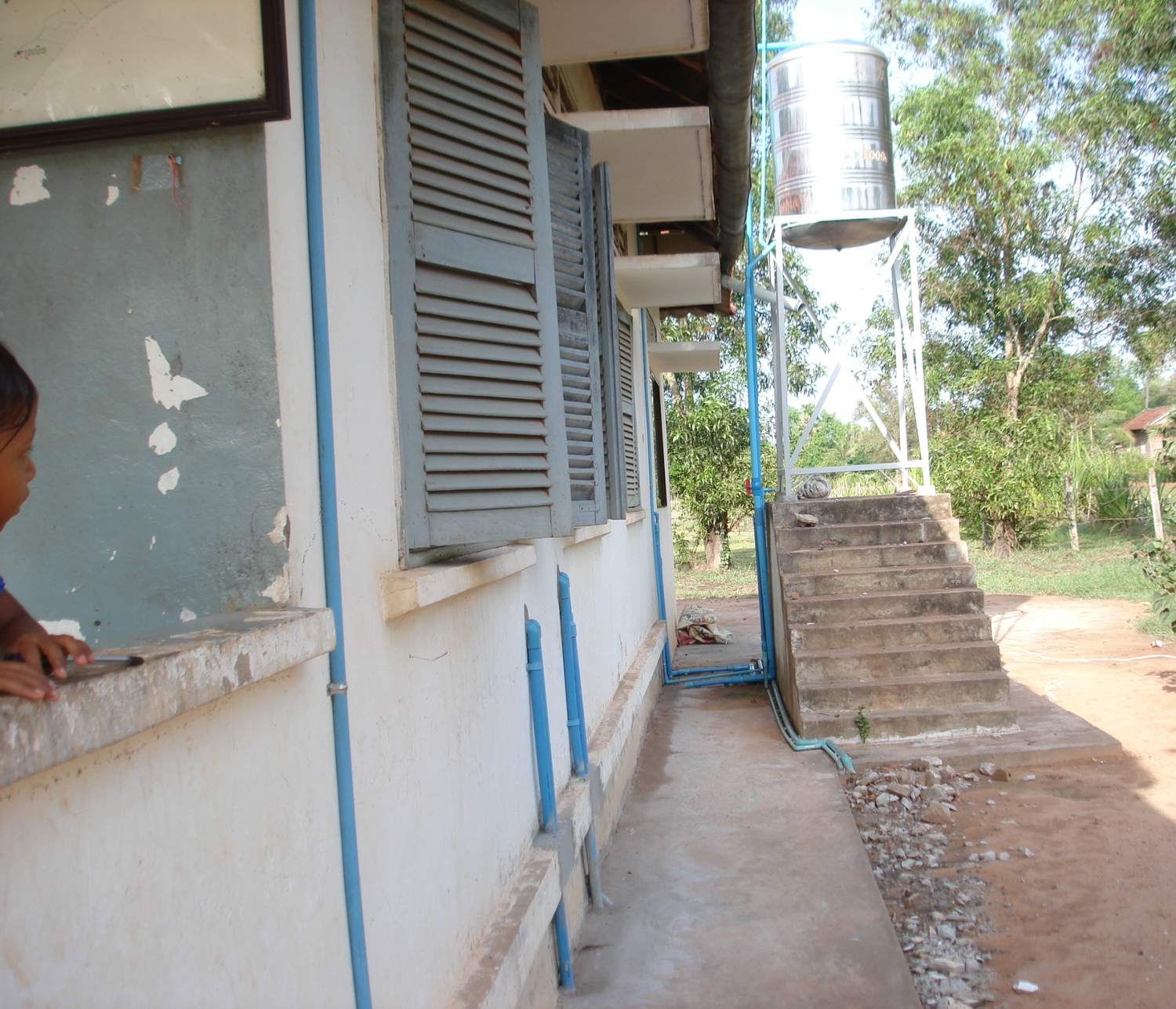
water distrubution system
Medical Care
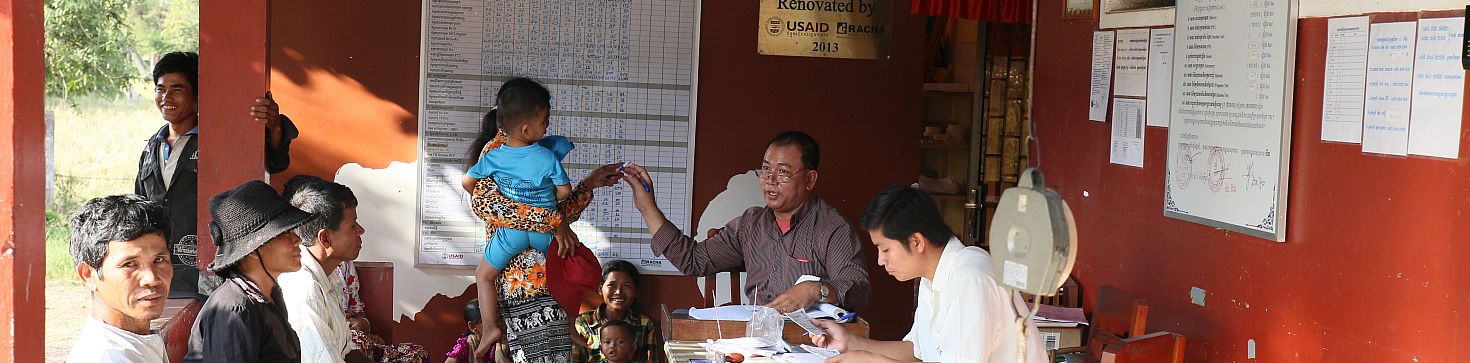
The 14 villages share one local health center, only manned with nurses. There is no system of calling a doctor, no possibility for medical transport of very sick people. In principle, medical care is free for all, in practice, the patients have to pay for transport, pay the doctors and nurses, because also these have very little earnings. CAMDOC/CCA supports the health center with basic facilities, like a renewed water distribution system with wash bowls in the treatment rooms, necessary furniture (patient beds) and from time to time some medical materials.
Together with Cambodia Child Aid, CAMDOC wants to introduce a cheap basic system of medical alarm and transport, as well as elementary financial support for treatment of the very sick poor. The main focus is on the treatment of sick children, which is really free of charge in two special children hospitals in
the 30 km nearby Siem Reap City.